![National Oceanography Centre [logo]](/themes/NOC8X-main/logo.svg)
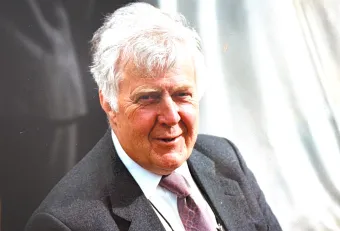
The National Oceanography Centre is saddened to learn of the death of James Crease (1927 – 2025), a scientist whose work helped shape physical oceanography and establish the technological foundations of modern marine science.
In 1954 James joined the pioneering ‘Group W’ scientists who become part of the new National Institute of Oceanography (NIO). NIO was to be the UK’s first multidisciplinary oceanographic research institution. Trained as a mathematician at Cambridge, he quickly established himself as a leading thinker in ocean physics, applying his expertise to complex challenges ranging from long-wave dynamics to geodetic measurements.
A defining contribution in 1959/60 was his work with his colleague John Swallow measuring deep ocean currents. Swallow’s newly developed subsurface floats provided the first evidence that the deep ocean was far more energetic and variable than previously thought. This discovery transformed scientific understanding of ocean circulation and derivatives of the floats are the backbone of today’s ocean observing system.
Prof. Penny Holliday, Chief Scientific Officer at the National Oceanography Centre, said: “James was a quiet pioneer whose work underpinned many of the advances we now take for granted in ocean science. His insight, generosity, and commitment to collaboration made a lasting impact on both the science and the people around him.”
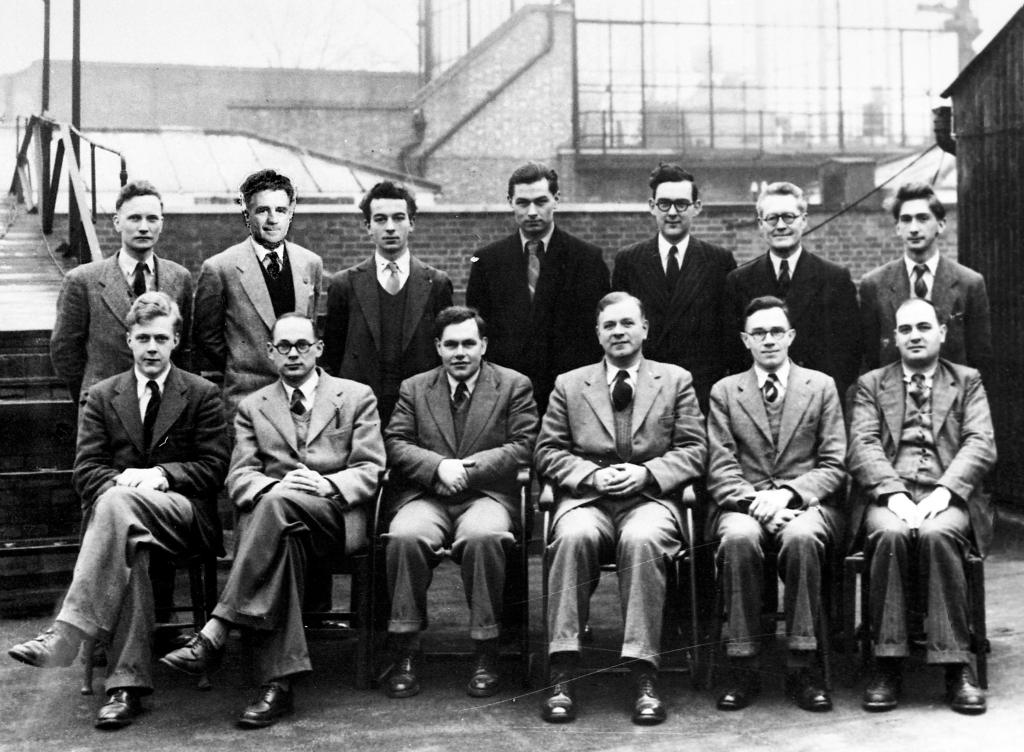
Group W with the newly-recruited James Crease (front row left)
A Pioneer of Ocean Technology and Data
Throughout his career, James played a central role in bringing UK oceanography into the digital age. It was he who led to the UK’s first shipboard computer and satellite navigation system being installed on RRS Discovery in 1969. Together these transformed how data were collected and how ships operated at sea.
Foreseeing the growing abundance of data, he was influential in establishing the British Oceanographic Data Service (BODS) and contributed to international efforts to standardise ocean data exchange through UNESCO’s International Oceanographic Data and Information Exchange. His work helped lay the foundations for the global sharing of oceanographic data that is the keystone of global oceanography.
In the early 1980s he was a founding member of the international team that designed the World Ocean Circulation Experiment (WOCE). This is one of the largest collaborative ocean science programmes ever undertaken, linking satellite and shipborne measurements and helping bring oceanography into the climate era of global observations and circulation models. His leadership and diplomacy secured the UK as the location for its international project office.
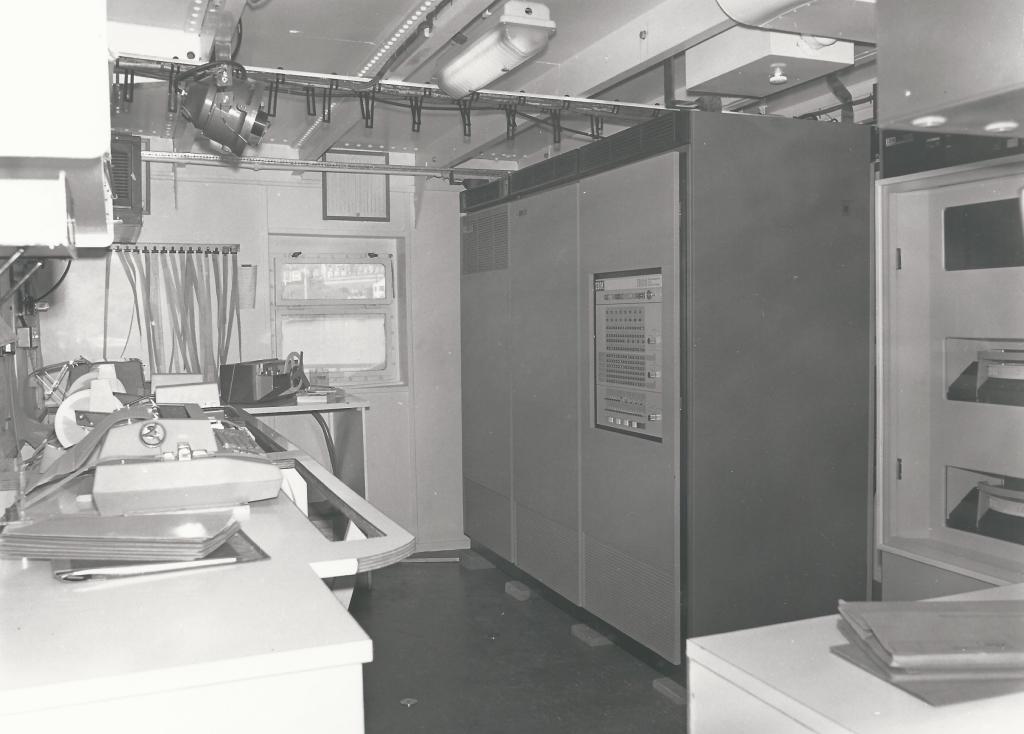
The computer room of RRS Discovery
A Legacy in data, standards and science
After retiring in 1988, James continued as a key player in the management and distribution of the unprecedented datasets generated by WOCE. These remain a vital benchmark for understanding long-term changes in the ocean and climate systems.
Beyond his scientific achievements, he was deeply committed to supporting others. He mentored many early-career scientists, several of whom went on to become leaders in UK and international oceanography.
He will be remembered not only for his scientific vision and innovation, but for his humility, quiet leadership, and lasting influence on generations of researchers.
His contributions, often embedded in systems, standards, and ideas rather than publications, still shape ocean science today.
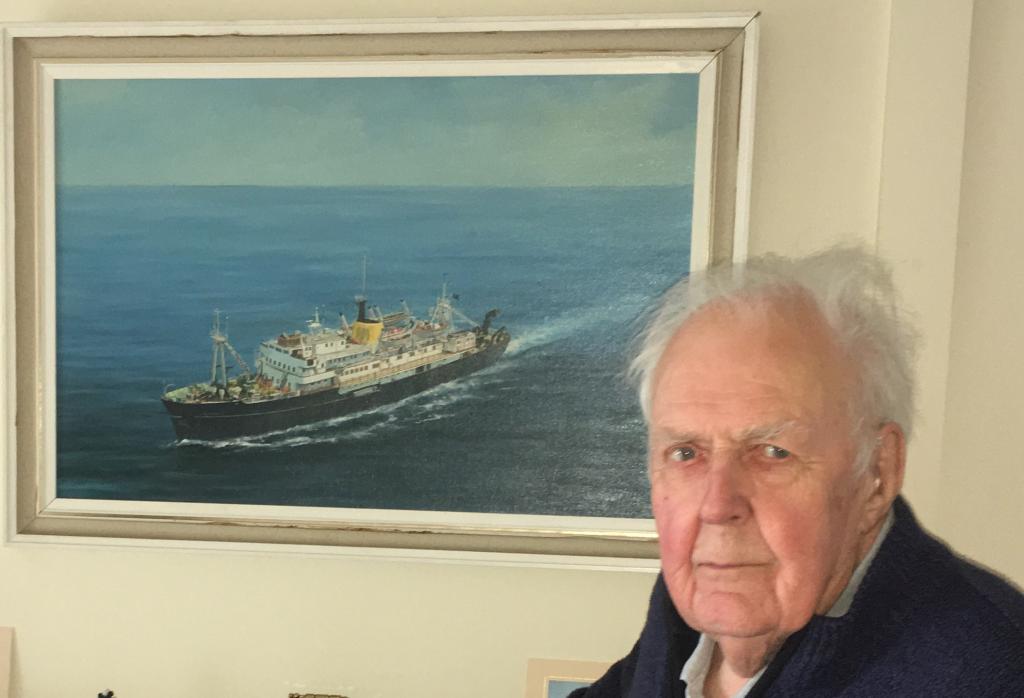
James Crease on his 90th birthday with the painting of RRS Discovery presented to him on his retirement in 1988.