![National Oceanography Centre [logo]](/themes/NOC8X-main/logo.svg)
Group
Biological Carbon Cycles
Site
Southampton
Email
s.giering at noc.ac.uk
I am interested in how marine organisms influence the capacity of the ocean to store carbon. My research combines shipboard and autonomous measurements, laboratory analyses, data synthesis and numerical modelling. Examples of my work include my data synthesis and modelling effort that resulted in the world’s first balanced carbon budget for the deep sea. I am building on this work, trying to understand the flow of carbon through the food web in contrasting environments through a number of national and international projects (e.g. NERC's COMICS, CUSTARD, ReBELS, CarTRidge, CHALKY and PARTITRICS (both BIOCARBON) projects; Horizon 2020 SuMMeR; ERC Starting Grant ANTICS).
To further our understanding of the biological carbon pump, I continuously challenge the state-of-the-art and drive the development of innovative methods and outside-the-box thinking. I promote the use of the ever-growing amount of data collected by optical devices and marine autonomous vehicles to infer ecosystem processes such as deep ocean carbon storage. My ERC Standard Grant ‘ANTICS’ (Advancing Novel Imaging Technologies and Data Analyses to Understand Interior Ocean Carbon Storage) allowed me to establish a research group specialising in the use of in situ imaging for plankton and particle research, including cutting-edge artificial intelligence. I chaired the dedicated SCOR working group TOMCAT, whose work includes the effort to promote standardized data recording, processing and deposition of optical data, and co-led the theme on in situ imaging for Horizon 2020's Technologies for Ocean Sensing programme (TechOceans) and the development of AI and Autonomous Systems for Biodiversity Monitoring (funded by the Alan Turing Institute).
My research group is highly diverse, and I enjoy identifying and mentoring the next generation of Earth scientists through mentoring and supporting students, including hosting POGO fellows.
To further our understanding of the biological carbon pump, I continuously challenge the state-of-the-art and drive the development of innovative methods and outside-the-box thinking. I promote the use of the ever-growing amount of data collected by optical devices and marine autonomous vehicles to infer ecosystem processes such as deep ocean carbon storage. My ERC Standard Grant ‘ANTICS’ (Advancing Novel Imaging Technologies and Data Analyses to Understand Interior Ocean Carbon Storage) allowed me to establish a research group specialising in the use of in situ imaging for plankton and particle research, including cutting-edge artificial intelligence. I chaired the dedicated SCOR working group TOMCAT, whose work includes the effort to promote standardized data recording, processing and deposition of optical data, and co-led the theme on in situ imaging for Horizon 2020's Technologies for Ocean Sensing programme (TechOceans) and the development of AI and Autonomous Systems for Biodiversity Monitoring (funded by the Alan Turing Institute).
My research group is highly diverse, and I enjoy identifying and mentoring the next generation of Earth scientists through mentoring and supporting students, including hosting POGO fellows.
Employment
Apr 2017 – open end
Research Fellow, National Oceanography Centre, Southampton, UK
Dec 2016 – Mar 2017
Project Scientist, University of California, Santa Barbara, USA
Jun 2015 – Nov 2016
Post-doc Research Fellow, National Oceanography Centre, Southampton, UK
Jan 2014 – Jun 2015
Post-doc Researcher, University of Aberdeen, UK
Jul 2013 – Dec 2013
Research Assistant, University of Aberdeen, UK
May 2013 – Jun 2013
Twilight Zone Ecology Researcher, National Oceanography Centre, UK
Education
2009 – 2013
PhD Marine Biogeochemistry; University of Southampton, UK
2006 – 2009
BSc (Hons) Marine Biology; University of Aberdeen, UK
Publications
For an up-to-date list of my publications check out my google scholar profile. You can also find me on ORCiD and Researchgate.
Supervisor of 5 MSc students, 3 PhD students, 2 POGO fellows.
Participated in 13 research cruises.
Guest editor for the journal Frontiers in Marine Sciences on the Research Topic We Shed Light: Optical Insights into the Biological Carbon Pump
Work package leader for the COMICS synthesis work
Co-investigator in CUSTARD for vertical particle transport
Co-investigator in the Shelf Sea Biogeochemistry programme for the role of zooplankton in the shelf sea ecosystem
Previously Chair of SCOR Working Group 150: Translation of Optical Measurements into particle Content, Aggregation & Transfer (TOMCAT)
Member of the International Science Advisory Board for Ocean Networks Canada
PARTITRICS (PARTIcle Transformation and Respiration Influence on ocean Carbon Storage)
CHALKY (CoccolitHophore controls on ocean ALKalinitY )
CarTRidge (Enhanced carbon export driven by internal tides over the mid-Atlantic ridge)
ReBELS (Resolving Biological carbon Export in the Labrador Sea)
ANTICS (Advancing Novel imaging Technologies and data analyses in order to understand Interior ocean Carbon Storage)
CYHMSF (Can You Hear Marine Snow Falling)
Alan Turing's AI and Autonomous Systems for Biodiversity Monitoring
MARCO-BOLO (Marine Coastal Biodiversity Long-term Observations)
TechOceanS (Technologies for Ocean Sensing)
SuMMeR (Sustainable Management of Mesopelagic Resources)
COMICS
CHALKY (CoccolitHophore controls on ocean ALKalinitY )
CarTRidge (Enhanced carbon export driven by internal tides over the mid-Atlantic ridge)
ReBELS (Resolving Biological carbon Export in the Labrador Sea)
ANTICS (Advancing Novel imaging Technologies and data analyses in order to understand Interior ocean Carbon Storage)
CYHMSF (Can You Hear Marine Snow Falling)
Alan Turing's AI and Autonomous Systems for Biodiversity Monitoring
MARCO-BOLO (Marine Coastal Biodiversity Long-term Observations)
TechOceanS (Technologies for Ocean Sensing)
SuMMeR (Sustainable Management of Mesopelagic Resources)
COMICS
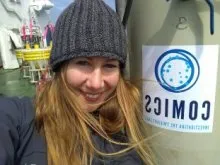
COMICS (Controls over Ocean Mesopelagic Interior Carbon Storage) aims to quantify the flow of carbon in the ocean’s ‘twilight’ zone in order to more accurately model global climate change. We have had two expeditions to two fascinating sites: The Benguela Upwelling off the coast of Namibia and the Southern Ocean around South Georgia. By studying these two contrasting environments, we can better understand what drives ocean carbon storage. I have been heavily involved in the field work and am the leader for the synthesis work package.
CUSTARD (Carbon Uptake and Seasonal Traits in Antarctic Remineralisation Depth)will examine how seasonal changes in food availability for phytoplankton at a key junction of the global ocean circulation influences how long carbon is trapped in the ocean rather than escape to the atmosphere as carbon dioxide. My work will focus on supervising a small group that uses optical devices to estimate vertical particle fluxes.
A holistic approach to the cycling of nutrients and carbon and the controls on primary and secondary production in UK and European shelf Sea, to increase understanding of these processes and their role in wider biogeochemical cycles.