RRS James Cook cruise 062 - 25 August 2011

August 30, 2011
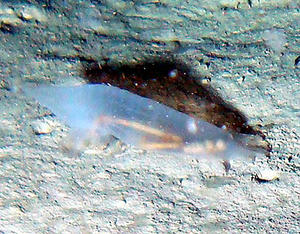
A translucent sea cucumber (Peniagone sp.)

Ahoy, everyone! A couple of days ago, we finally left the Porcupine Abyssal Plain after a very successful sampling regime of megacoring, trawling, and the deployment of various other instruments over the past few weeks.
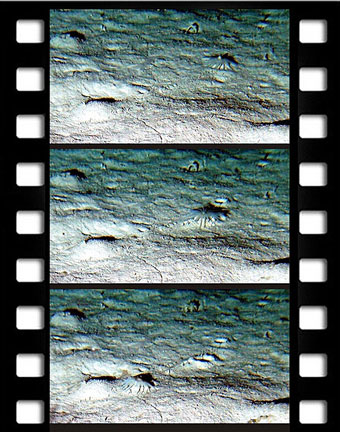
Montage of an anemone moving from one hole into another. The pictures were taken over the course of several hours.Today, we will arrive in the Porcupine Seabight, which is situated to the northeast of PAP. Similarly to the PAP site, scientists have visited it repeatedly since the 19th century. The area we are interested in is characterized by large sponge aggregations (mainly Pheronema carpentri), which were first discovered in the 1860ies. The skeletons of these sponges are made of siliceous spicules and they are therefore referred to as glass sponges.

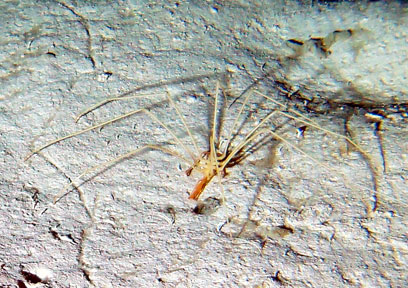
The OSPAR Commission (www.ospar.org) named “sponge aggregations” as priority habitats, since they represent so-called hotspots of biodiversity. In addition to the existence of the various sponges themselves, a myriad of animals find refuge in the sponge itself as well as in the glass-fibre mats that remain on the seafloor once the sponge has died. These collapsed glass-fibre skeletons tend to remain on the seafloor unless they are removed by artificial disturbances, such as trawling, which makes these sponges excellent indicator species for fishing activities.A large sea spider (Pycnogonid)


During our visit to the Seabight, we will deploy WASP (see previous blog) to fly transects across the sponge fields and to take high-definition images and video footage. Our aim is to check on sponge densities and to compare them to results from the 1980ies, when scientists recorded the number of sponges using sledge cameras. Back then, deep-water trawling was not yet an issue in the Seabight, whereas nowadays, fishing activities threaten numerable vulnerable habitats in UK waters.
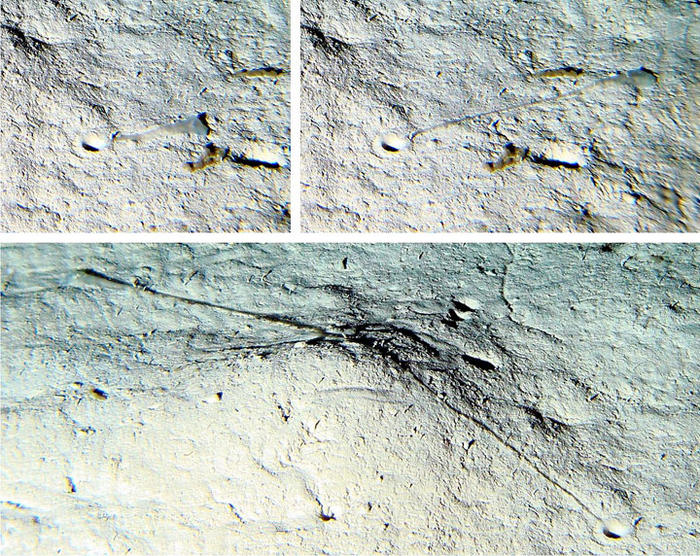
A montage of an echiuroid worm (spoon worm) feeding with its super long proboscis. This particular echiuroid worm itself is only a few centimetres long and sits in a small hole, while sticking out its enormously long feeding tube, which is highly mobile but cannot be retracted.

Ahoy for now…

First blog

Previous blog

Next (and final) blog


Home | Back to top


Information for…

Business

The outputs of scientific research generate new knowledge and information about the oceans and seas.  Transfering scientific knowledge to support business and industry is an important part of our remit at NOC.

More

Researchers

Our research is intended to tackle the big environmental issues facing the world. Research priorities will include the oceans' role in climate change, sea level change and the future of the Arctic Ocean.

More

Students

The University of Southampton and the University of Liverpool both offer a range of highly regarded undergraduate and post-graduate degrees in Ocean and Earth Science.

More

Media

For any media or press enquiries to the National Oceanography Centre follow the more link below. Please note the centre's press office is staffed from 0830 to 1730, Monday to Friday.

More

Staff

NOC Staff can access the Intranet and Webmail resources at the following URLS.

Everyone

Follow what we are up to:

Follow NOCnews on Twitter Follow NOCSnews on Youtube

Delivery Partners

Delivery Partners helping to provide marine science national capability.

More

Marine Science Community

The creation of a wider association of Universities and research institutions to support wider engagement of the NOC with the marine science community is now underway.

More 

Library

The National Oceanographic Library is a national resource for the UK marine science community.

More